The 5 types of content that keep an e-commerce community alive
An empty forum scares people away. The five content formats that get customers talking to each other, with examples and how often to post each one.
Opening a forum on your store takes ten minutes, but getting customers to keep posting on it takes regular work. An e-commerce community that fades out usually lacks reasons to come back far more than it lacks members. Customers rarely log in just to browse and they come back when there is a new question, photo or announcement to read.
In the brand forums that work, five types of content come up every time. They need no budget and no dedicated team, only a little consistency and above all the willingness to let your customers take the floor.
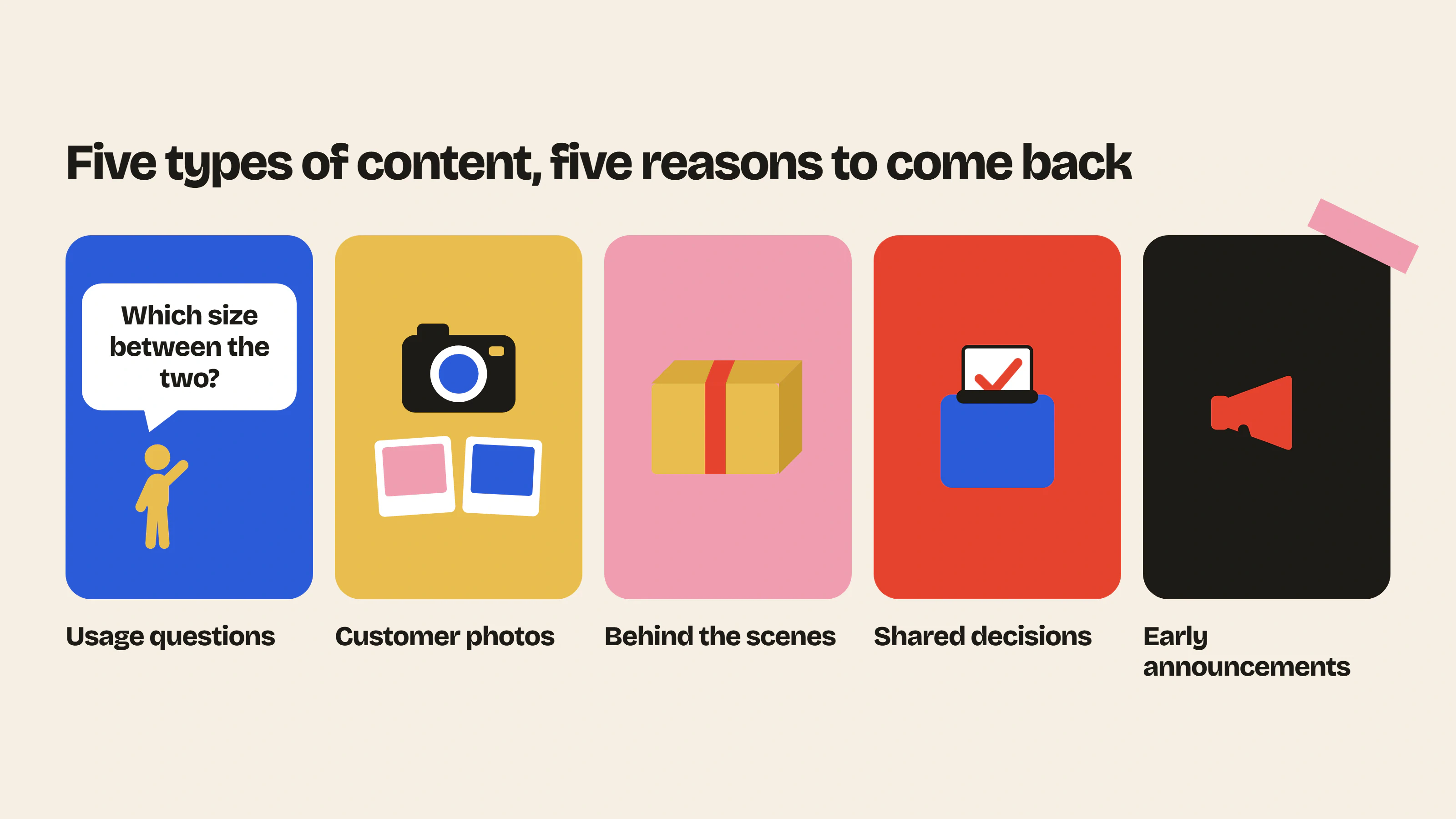
1. Usage questions, the content that creates itself
Usage questions are the easiest content to start with, because customers already have them. They ask “Which size between the two?”, “Is it dishwasher safe?” or “How do you use it day to day?” These questions already land in your support inbox. In a forum they become public and other customers answer them before you do.
Prospects trust an answer written by a buyer more than one written by the brand, because they read it as honest, with its nuances and its “it depends”.
To get this category going, take your ten most frequent support questions and post them yourself in a “Help” category, signed with your first name. Answer each in one sentence and leave the thread open so customers can add their own experience. As soon as a customer answers in turn, thank them publicly. From then on, new questions come in from customers and this category needs no preparation on your side.
2. Before/after and customer photos
A customer showing your product at home, in everyday life, convinces prospects better than any ad you could run. Posted on Instagram, that photo disappears after twenty-four hours, while on your forum it stays online and your next customers can find it again.
Four formats get more posts than the others and the right one depends on what you sell. The before/after suits products that transform something. Home and DIY have “here is how I installed it”, fashion has “today’s outfit” and skincare has “results after three weeks”.
Create a dedicated category and post the first photos yourself, with permission from customers who already emailed them to you. Then launch a simple call, “Show us yours”. A small voucher for the photo of the month is enough to get it going. After that, plan one call for photos per month and one featured customer photo per week.
3. Behind the scenes
Your customers chose a small brand over a big retailer and they want to know who is behind it. The next product being designed, a visit to the workshop, a manufacturing mistake and how you fixed it, a day in the life of a parcel… Everything you already tell your friends interests your community.
These posts do not necessarily generate many replies, but customers who read them get attached to the brand and come back to the forum to read the next ones.
Open a “Behind the scenes” or “Journal” category and post short messages with a phone photo, without staging. End with an open question such as “Which color would you have picked?” One post every two weeks is enough, as long as you keep that pace for months instead of posting a lot in the first weeks and then stopping.
4. Shared decisions
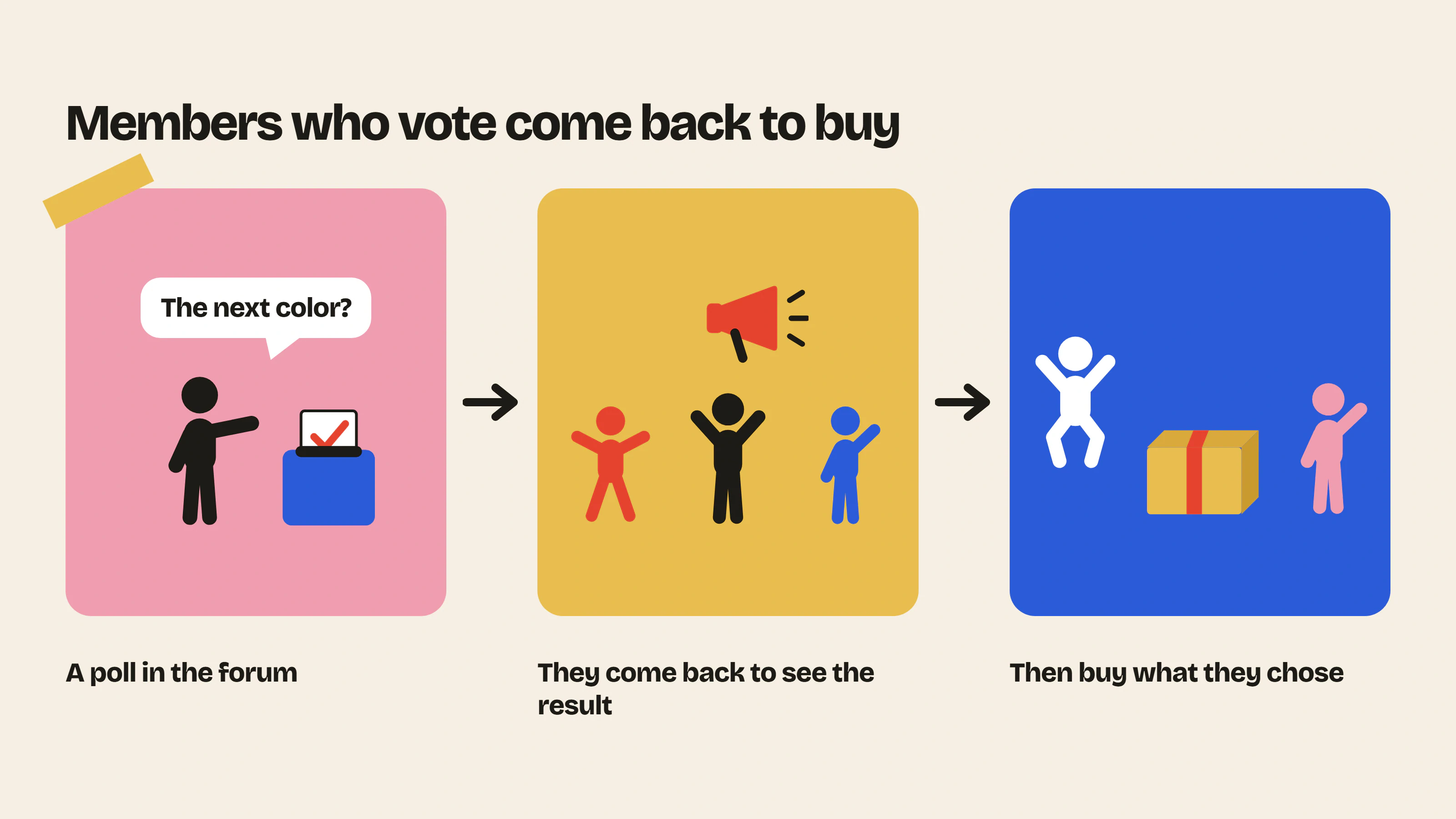
Of the five types, shared decisions bring members back the most, yet few brands use them. You ask your community to decide on the next color, a product name, the format of a gift box or the release order. You open a poll in the forum, set a deadline and announce the result publicly.
Members who voted come back to see the result, then come back to buy what they chose. And you get free market research from customers who have already paid for your products.
Start small, on a decision you are ready to hand over to the community for good. If the result of a poll is never shared, members stop trusting the next ones. One shared decision per month is enough, or one with each new release.
5. Early announcements
The word “club” in Insider Club refers to the privileges a community needs, such as seeing a product before everyone else, accessing a pre-order or learning about a promotion twenty-four hours before the newsletter goes out.
These announcements give an objective reason to be a member and to log in. They combine very well with categories restricted to logged-in customers, whose content only they can see and which they know is reserved for them.
Create an “Announcements” category reserved for your team and keep the promise that every new release appears there first. Mention it on your product pages and in your emails, since it is your sign-up argument. Post there with every launch and at least once a month to keep the habit.
The right mix
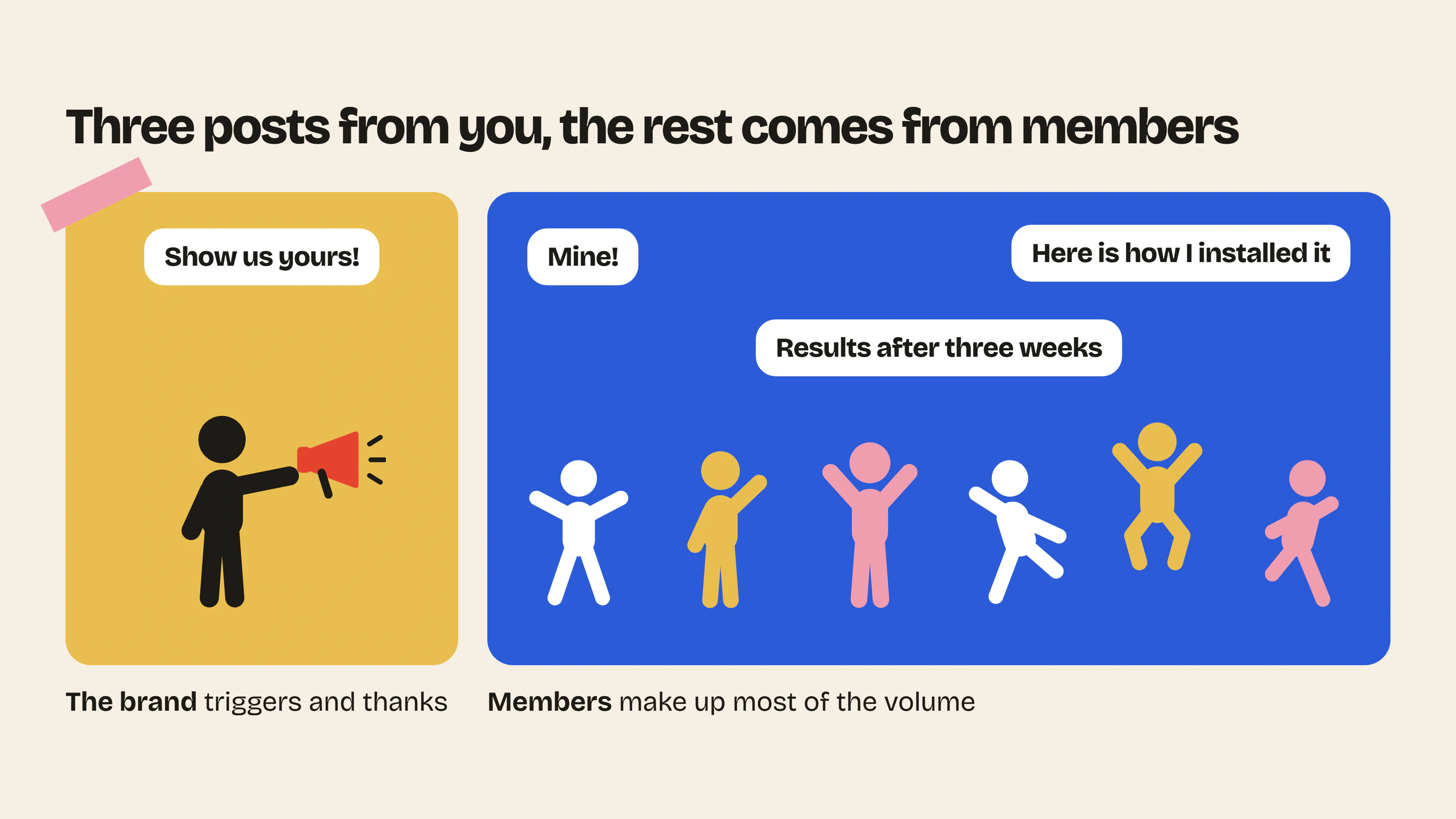
In a community that works, usage questions and customer photos make up most of the volume without you having to step in. On top of that you add behind-the-scenes posts every two weeks, then one shared decision and one announcement per month. Those three types of posts from your side are enough, since members write everything else.
Your job is to trigger the content and to thank the people who write it. In the first weeks, answer fast and highlight the best contributions. Then post less yourself as members start answering each other and take over the space.
Where do you start this week?
- Create three categories (Help, Photos, Announcements) and no more at first. Post ten frequent questions in Help with your short answers.
- Email your customers from the last six months with a single call, “Show us yours”.
- Post a sneak-peek announcement, even a modest one.
- Put a behind-the-scenes post in your calendar every two weeks.
To keep up this pace over time, our article on community engagement ideas offers 60 recurring events, weekly, monthly and yearly.
The other content will follow as the first members post their questions and photos and you reply to them.
If you are starting from scratch, our guide to building a brand community covers every step, from preparation to launch, with 30 post ideas.
To go further, read our article on community marketing for e-commerce, the one that explains why to add a forum to your Shopify store and the page that presents all the forum features.
- Launch post generatorTen ready-to-publish first posts to launch your forum: title, text, category and format.Use the tool – Launch post generator
- Customer support cost savings calculatorThe hours and dollars saved when your community answers your customers' repetitive questions.Use the tool – Customer support cost savings calculator
 Install on Shopify