Community marketing: definition, benefits and examples for e-commerce
Community marketing (or tribal marketing): definition, benefits, concrete examples and a 4-step method to build yours as an e-commerce brand.
Your customers are already talking to each other. Under your YouTube videos, in a Facebook group, in private messages and on social media. Community marketing turns these scattered conversations into a lever that works for your brand.
In this guide, you will find our definition of community marketing (also called tribal marketing), what sets it apart from community management and influencer marketing, concrete examples and a four-step method to build your own.
What is community marketing?
A simple definition
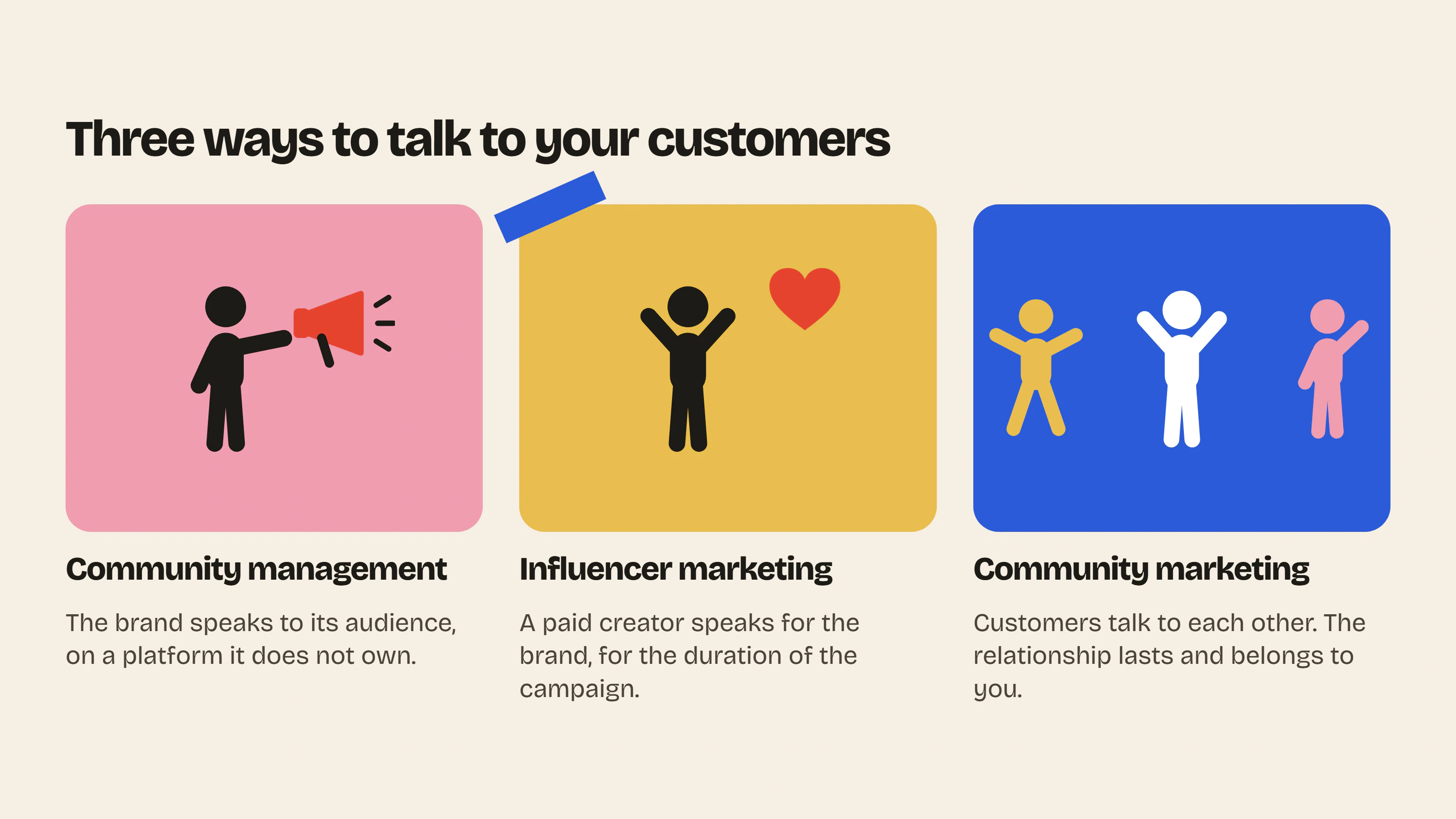
Community marketing is a strategy that brings customers together around a shared interest, then gets them talking to each other. The brand no longer just speaks to its audience: it creates the conditions for its customers to speak to one another.
Community marketing or tribal marketing?
The two terms are very close. “Tribal” emphasizes the sense of belonging. Members recognize each other and share a vocabulary, rituals and sometimes jokes nobody else understands.
Organic or sponsored: two ways to do it
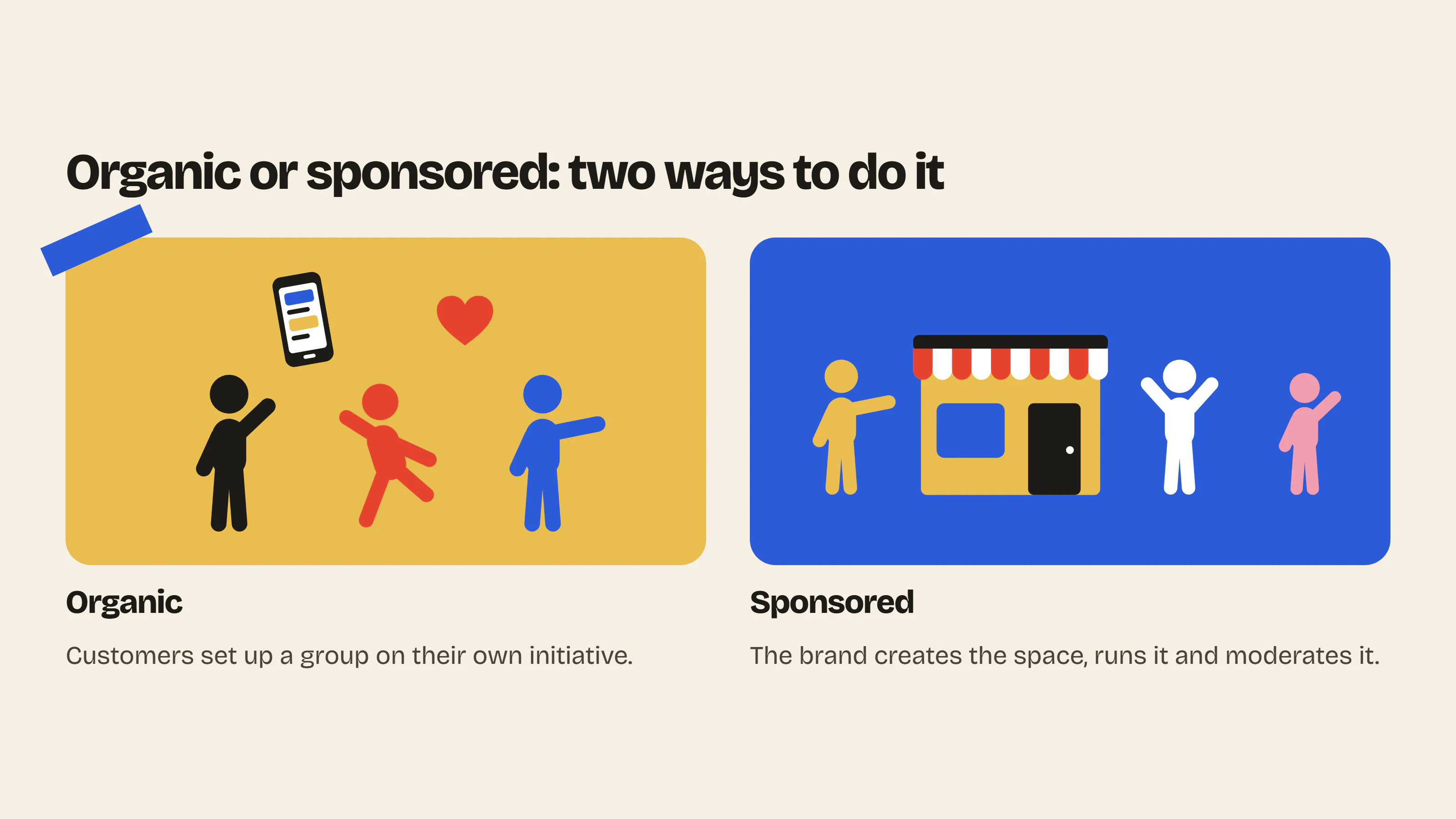
Organic community marketing is born without the brand. Customers set up a group, a server or a discussion thread on their own initiative.
Sponsored community marketing is driven by the brand, which creates the space, runs it and moderates it.
Many brands experience the first kind without knowing it. Social media is a case in point: plenty of customers speak up and debate under your posts without any input from you.
Community marketing, community management, influencer marketing: don’t mix them up
| Community marketing | Community management | Influencer marketing | |
|---|---|---|---|
| Goal | Get customers talking to each other | Engage and moderate an audience | Reach someone else’s audience |
| Who speaks? | The members, first and foremost | The brand | The paid creator |
| How long the effect lasts | Long term and cumulative | As long as you keep posting | For the duration of the campaign |
| Who owns the relationship | You, if the space is on your site | Often shared with a platform (Instagram, for example) | The creator |
Which brands does community marketing work for?
Community-led marketing is not for every brand. A brand selling basic apparel has little reason to bring its customers together. A cosmetics, sports equipment, home decor or kitchenware brand does. Its customers share an interest that exists independently of the brand. Three reasons explain this advantage.
The shared interest provides the content. You don’t need to invent topics. Your customers have questions, results to show, opinions and ideas.
A brand with a face builds connection more easily. When a brand is carried by its founder or its team, customers also come for them. A space where people can talk with the brand and with other customers offers something big retailers struggle to provide.
The audience already exists, just elsewhere. YouTube subscribers, members of your Facebook group, Instagram and TikTok followers. The job is not to build a community from scratch, but to bring it together.
The detailed benefits (loyalty, peer support, lighter support) are covered in why build a brand community.
Community marketing examples
A classic: the Harley Owners Group
The official club for Harley-Davidson owners is the most cited example, with its rallies, rides and online discussions. It shows that a community is built around a lifestyle.
Four e-commerce brand scenarios
A cosmetics brand opens a space where customers share their routines, their before-and-after photos and their questions about which products suit their skin. A question asked once then serves everyone else.
A sports equipment brand publishes its training tips on YouTube and invites subscribers to share their progress on its site. Scattered comments become a permanent space for peer support.
A home decor brand gathers customers around their interior design projects. They share photos of their homes, ideas for pairing pieces and advice before buying.
A coffee brand runs one thread per brewing method (filter, espresso or cold brew) where customers share their recipes and settings.
Is community marketing only for big brands?
It is the most widespread misconception, and it is backwards. A big brand has to manufacture closeness, while a small brand has it naturally. A big brand needs thousands of active members for its space to look alive. A smaller brand can keep a club going with a few dozen customers who know each other by first name.
What small brands lack is not legitimacy, but time. Hence the need for a community strategy that does not rely on being there every day.
How to build a community marketing strategy
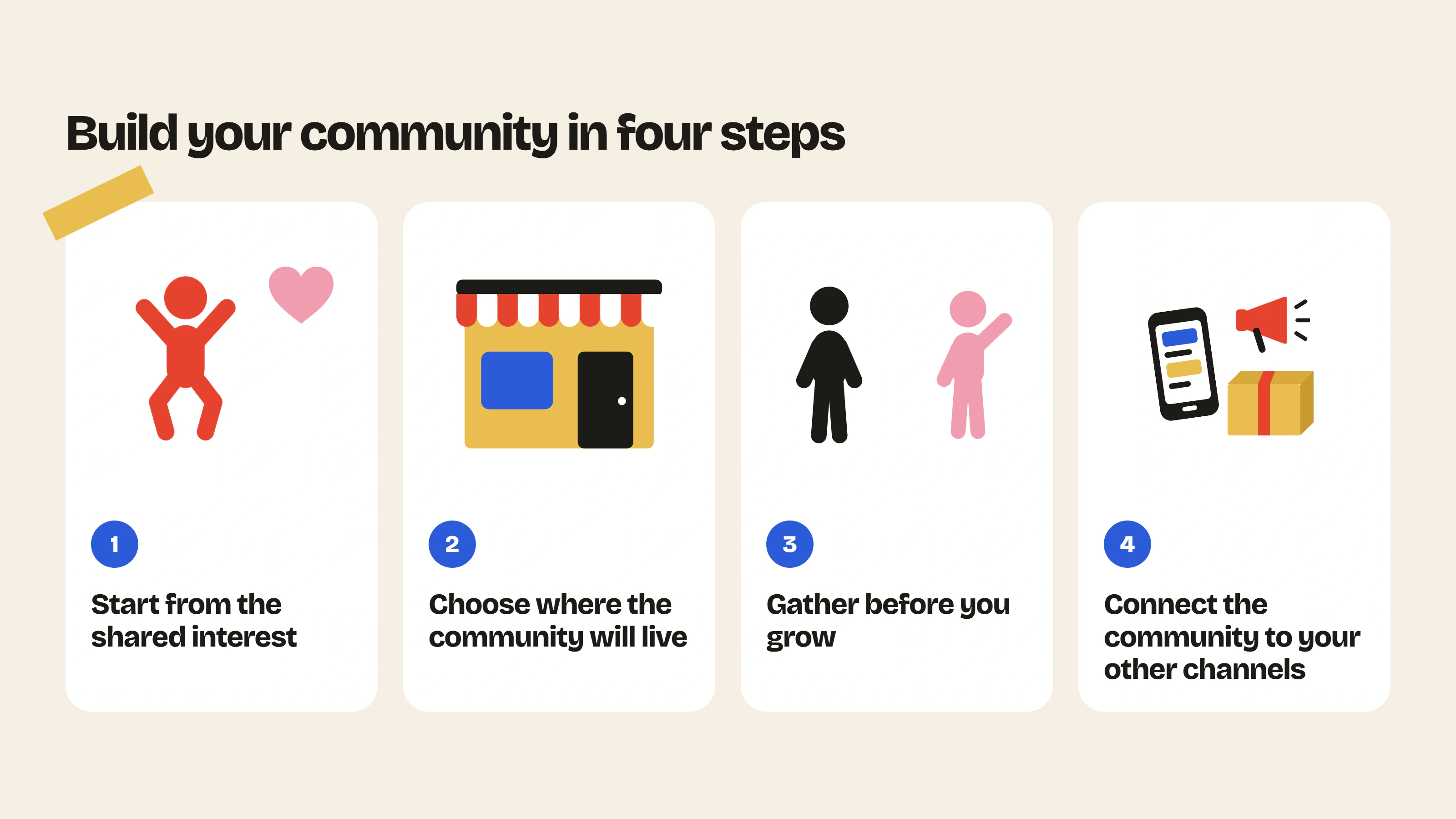
1. Start from the shared interest
Your customers don’t gather around a logo, but around a shared interest. They want to take care of their skin, improve at their sport, furnish their home or cook better. A community around a cosmetics brand talks about routines before it talks about your products. Write down in one sentence why a customer would come, for example “find the routine that suits my skin”, “make progress alongside other athletes” or “find ideas for my home”.
2. Choose where the community will live
The deciding criterion is simple: who owns the conversations if the platform changes its rules tomorrow? We compare Facebook groups, Discord and Insider Club in which online community platform to choose.
3. Gather before you grow
Start with the people who already follow you: your loyal customers, your most active subscribers and the members of your group.
4. Connect the community to your other channels
Every YouTube video ends with an invitation to discuss it in the club. Every email highlights a discussion. Every order comes with an invitation to share feedback in the community. It becomes the meeting point for all your channels.
FAQ
What is community marketing?
A strategy that brings a brand’s customers together around a shared interest and gets them talking to each other to build loyalty, peer support and content.
Are community marketing and tribal marketing the same thing?
Almost. “Tribal” emphasizes the sense of belonging and the codes members share.
Is community marketing only for big brands?
No. It works particularly well for brands whose customers already share a strong interest.
How is it different from influencer marketing?
Influencer marketing rents a creator’s audience for the length of a campaign. Community marketing builds an audience that belongs to you and lasts.
How long does it take to see results?
Several months of regular effort. The first weeks are about establishing habits among your most active members.
Bring your community home
Insider Club adds a forum to your Shopify store, embedded in your theme with your colors and fonts. Logged-in customers are automatically members, with no extra password. 14-day free trial.
Further reading: The 5 types of content that keep an e-commerce community alive, User-generated content: an underrated SEO lever and all the forum features.
- Community previewPaste your store URL and see what your forum would look like, with your colors and your products.Use the tool – Community preview
- Launch post generatorTen ready-to-publish first posts to launch your forum: title, text, category and format.Use the tool – Launch post generator
 Install on Shopify